

We give people 30 days to try Accoil. For a long time I let that number run my thinking: 30-day trial, so we’ve got 30 days to win them over. Check in around day 30, see how it’s looking, try to rescue it or send a thank-you note.
That’s backwards. And I think a lot of us have been doing it.
Amplitude released a report saying that the first seven days of a new customer’s life has an outsized impact on their retention and lifetime value. The better activated someone is in those first seven days, the higher their retention rate at the 90-day mark. I’m now hearing versions of this on call after call. Teams everywhere are shrinking the window they actually pay attention to.
The 30-day trial trap
Turns out the 30-day window is a trap. If you offer a 30-day trial and you don’t look at the health and activity of an account until day 30, you’ve waited too long. There’s no time left to respond, react, nudge, or adjust. A 30-day window is really a decision made up front: we’ll let be what will be, and at day 30 we’ll either scramble to save it or pat them on the back and say thanks.
A seven-day window is a completely different posture. It says: let’s put as much of our attention, and ideally theirs, on getting activated, understanding the value, and making the rest of the trial genuinely useful. So that when the moment comes to put the credit card in, it isn’t even a question.
Why is the window shrinking?
Two reasons, I think.
First, it’s finally getting the attention it always deserved. I know a $30M ARR SaaS company that shifted focus away from retention work and toward onboarding work, because they realised the better their onboarding and activation, the higher their retention downstream. It’s a renewed focus on the highest-leverage moment you have with a customer: the very beginning.
Second, switching costs have collapsed. When I shop for tools now, I’ll run two or three at once. The one that’s easy to use and helps me get going wins. The one where I have to wait on a CSM to schedule a call, who then sends me docs I couldn’t find myself, loses. Momentum gets built or destroyed fast.
I can see it in our own numbers. The single biggest early predictor of conversion is how quickly a team connects a data source. Connect on day one versus the last week of the trial, and you are remarkably more likely to convert. We’ve even extended trials so teams could have a proper crack once data was flowing, and it still doesn’t work late. If the momentum’s gone, it’s gone. Get them activated early or it’s very hard to claw back.
This is the reframe: offering someone 30 days and needing 30 days are not the same thing. You offer 30 in the hope they find value. The window you actually manage might be seven days. It might be one day.
Think of Facebook’s famous activation metric of connecting with seven friends in ten days. Every product has its own version of that. Ours is connecting data, early. While we give people 30 days, what we really want to see between day one and day seven is an absolute frenzy of activation activity.
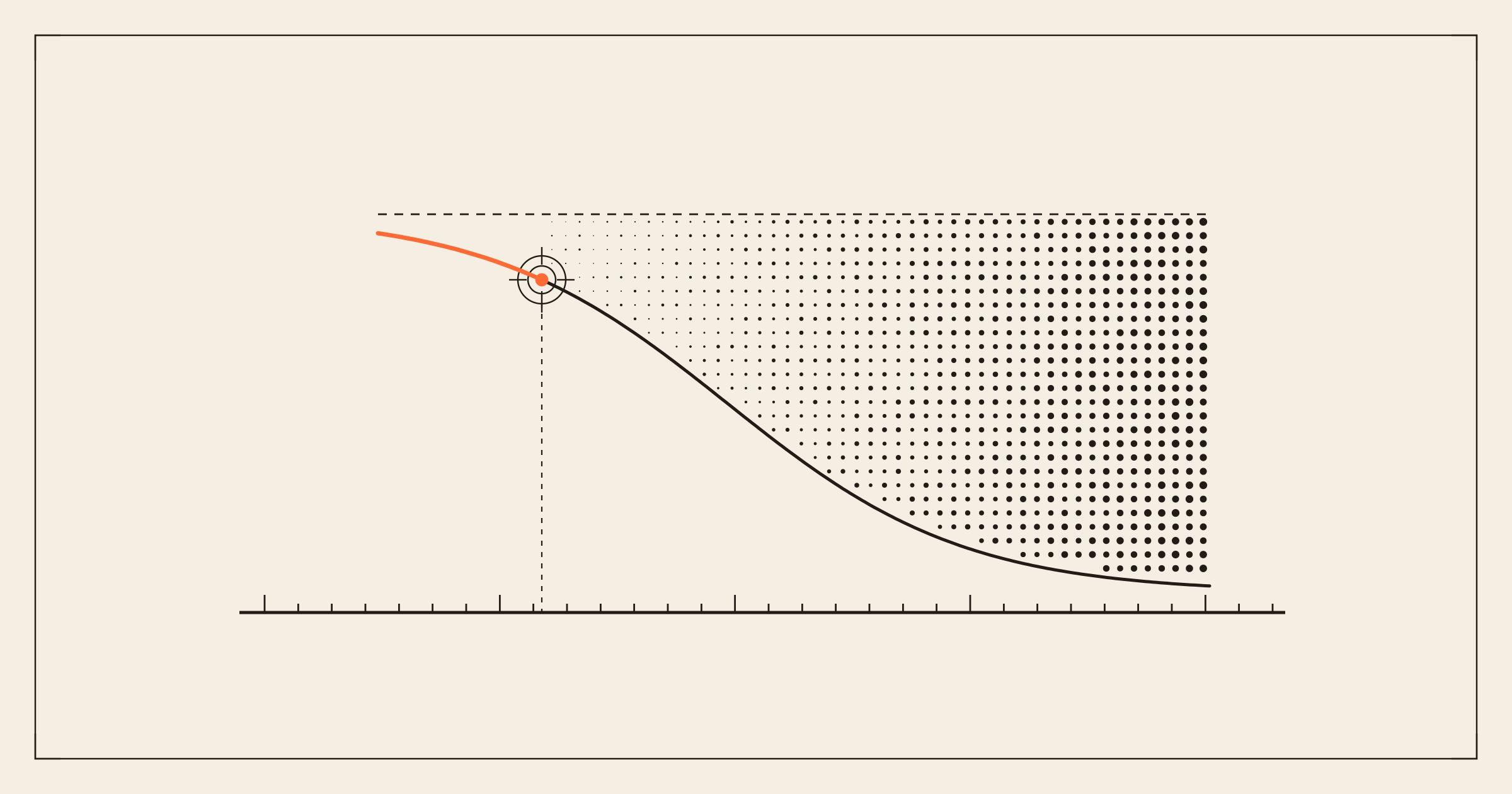
The shrinking activation window
The Monday-morning move, and this was literally my Monday this week: map your ideal onboarding day by day. Two dimensions, time and activity. On what day do you want a customer to complete what action? For us, if you can point your data source at Accoil in the first 15 minutes, we’re off and running.
So, what’s your product’s first step? Once you have that written down, move on to the next step on the ladder. Not all activation is linear, but for the first critical steps customers shouldn’t skip rungs.
Like copywriting, the point of the first step is to get them to the next step, and so on.
Day zero matters more than I gave it credit for. Map it. Then start asking the question our customers are now asking us: how do I measure time to activation, and what can I test to shrink it?
Peace out,
Peter