

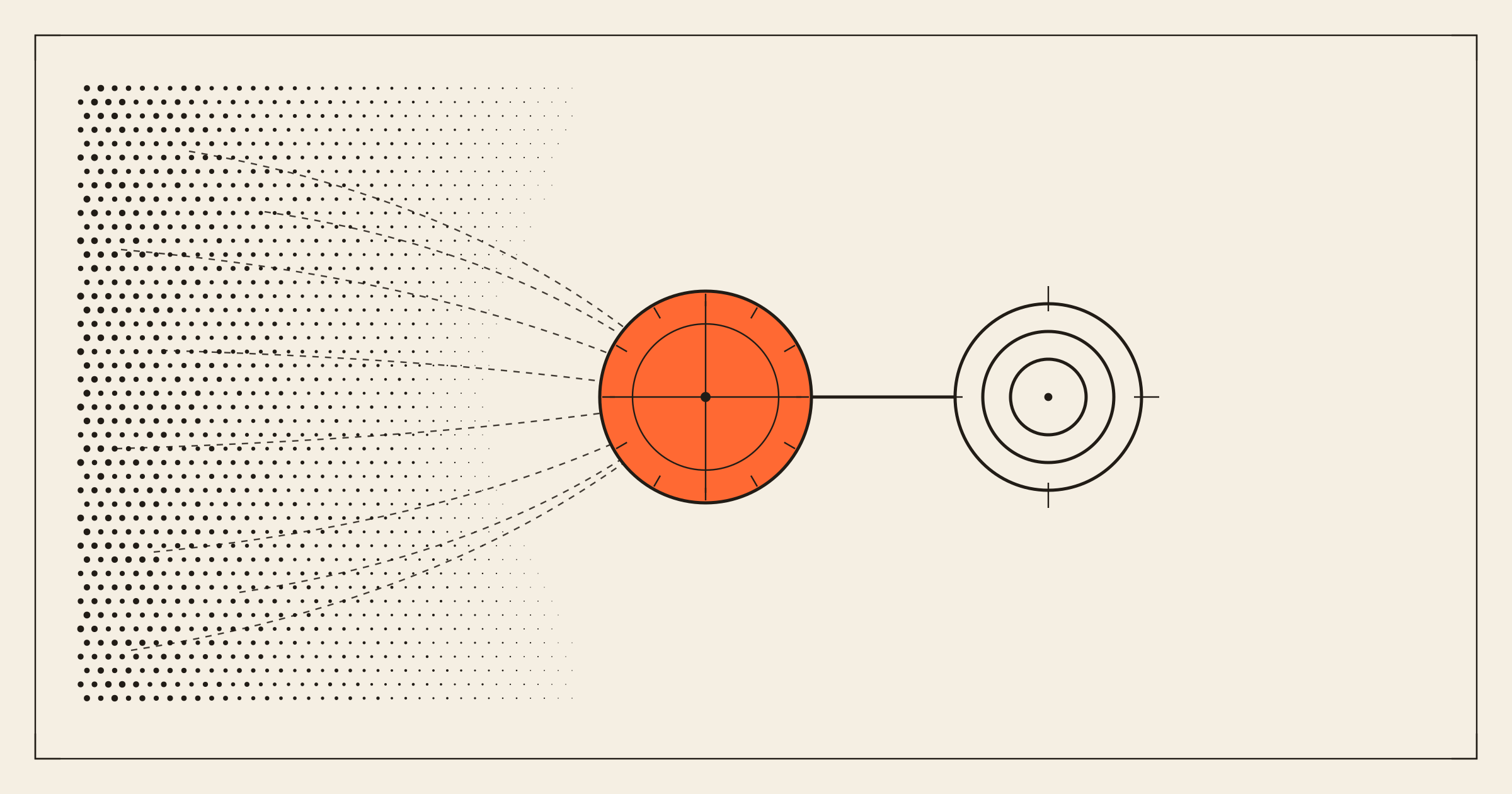
The hype in GTM right now is all about going from signal to action as fast as possible. A customer does something, a sequence fires. A prospect trips a trigger, an email lands. Signal straight to customer, automated to the hilt before anyone’s checked whether it works.
Fire. Ready. Aim.
It’s seductive, because the promise is that it runs on minimal effort and minimal input. You flip it on and it hums, that’s the promise I see a lot.
But the hype leaves a lot of the story buried.
Edison famously took 10,000 or more tries at developing a lightbulb that worked and lasted. A lot of the results we’re shown on LinkedIn and AI-hype-y Product Hunt launches are the 10,001st attempts -- the workflows and automations that survived the trials and testing.
Automation is not the first step
The hype isn’t an empty promise. It just whitewashes the work behind automation that’s actually any good.
There are teams doing amazing work. Workflows.io has some killer materials and their clients are benefiting from their work.
But what we see publicly are the workflows and automations that the team fought hard to build. And even then they’re always refining things. Any GTM builder will tell you the same -- it’s a constant evolution to find what works today and hopefully tomorrow.
How do you do that?
It isn’t by automating the heck out of everything first.
Point your signals at yourself first
So before you wire a signal straight to the customer, point it at a human you know first. Build for signal to sales rep. Signal to success manager. Signal to the teammate who owns the account.
Send the signals to the human who owns the judgment and has the ability to look at something and know whether it’s the right move. Automation without this misses a lot of important nuance.
Even if you feed it every call and support ticket you own, your AI won’t have the same level of context and awareness of even junior teammates. Some things just don’t translate into robot.
A Head of Growth I know put it like this:
if the signal went straight to their customer, it felt like a missed opportunity, a relationship moment handed to a machine instead of a human. Most business is still human to human. That’s what makes or breaks deals.
I’ve felt the cost of skipping that. I gave an outreach tool what I thought were tight parameters, and it reached out to people we should never have been selling to. A symptom of moving through the build loop too fast.
Maybe it doesn’t feel like it cost much, but there’s reputational damage at risk. When there is a relationship worth having, getting it wrong costs a lot more.
It’s noisy out there
There’s noise underneath every signal-based GTM motion. AI is powerful, but everything was already noisy, and AI has made it really easy to turn up the volume.
So many tools promise to be the single pane of glass that filters the signals, yet I’ve never seen one team actually run from one.
That’s why we, the humans, still need to be in the loop for any automations or agentic flows we’re building. To help discern signal (value) from the noise.
When to skip the HITL
Is signal straight to customer ever right? Sure. If you’ve got a PLG, self-serve motion, it’s probably expected by customers.
For PLG + Sales-led companies like Atlassian, there are clear customer segments that warrant different approaches. For the PLG, self-serve customers, it’s fine to skip the human-in-the-loop because there are too many people to communicate with and the value from that work isn’t there in the form of high ACV. Self-serve customers can get shorter signal-to-action loops because there’s less at stake.
That’s not to say they should be treated like garbage. Put some effort into the automation, but don’t have a teammate sitting there reading every signal-based in-app message before it’s sent.
Higher ACV customers can and should benefit from the discernment and taste of a human. If your key customers have a seasonal business or have shared some context with you no AI would ever know, that’s leverage you can use to make the signal-to-action logic even better.
Start simple
If you’re not running data-backed signal-to-action campaigns, why not? If you’re building SaaS or online at all, you have data you can use.
Pick one outcome and one workflow for one role. Find a signal that supports the outcome. Run experiments, and route the signal to the human on your team so the judgment stays in.
Once you’ve run the workflow enough and are up to 80-90% sure automating it would bake that judgment in, expand from there.
Start simple. Keep the human in the loop until the loop earns its automation.
Peter